


You’ve likely heard of the phrase “numbers don’t lie,” but in the world of podcasting, they often tell an incomplete story.
Many podcasters focus on vanity metrics like download numbers, but overlook other metrics and insights that prove a bigger impact – whether that’s through tying your podcast to wider business goals, overall podcast message impact, or understanding your audience.
And that last point is what I’ll be diving into today.
This past month at CoHost, our product team noticed a massive surge in users diving into ‘Show Analytics’. With that said, it’s clear that podcasters are no longer just hosting – they are trying to interpret who is actually on the other end of the headphones.
To help you do that, I’ll be diving into specific steps on how you can move beyond vanity metrics and interpret your podcast audience profile to ensure your content is in alignment with your target listeners.
TL;DR: Actioning your podcast audience insights
- Move beyond vanity metrics: Total downloads only measure potential reach; use your audience profile to ensure you’re reaching the right people, not just more people.
- Verify geographic alignment: Use the “Downloads by Location” map to verify your show’s footprint matches the specific regions and markets your brand intended to target.
- Audit engagement with consumption rates: Analyze your “Weighted Average Completion Rate” to prove listeners are staying engaged with your core message, not just clicking.
- Action show-level vs. episode-level data: Use show-level trends for long-term health checks and episode-level data to refine your content strategy and hone in on your high-resonating topics.
What is a podcast audience profile?

A podcast audience profile is a complete snapshot of who is listening to your show and their specific engagement habits.
At CoHost, this profile collects a variety of data to help you visualize the individuals behind the devices. By centralizing these insights, the audience profile serves as a primary tool for brands to identify if their content is reaching the specific segments they intended to influence.
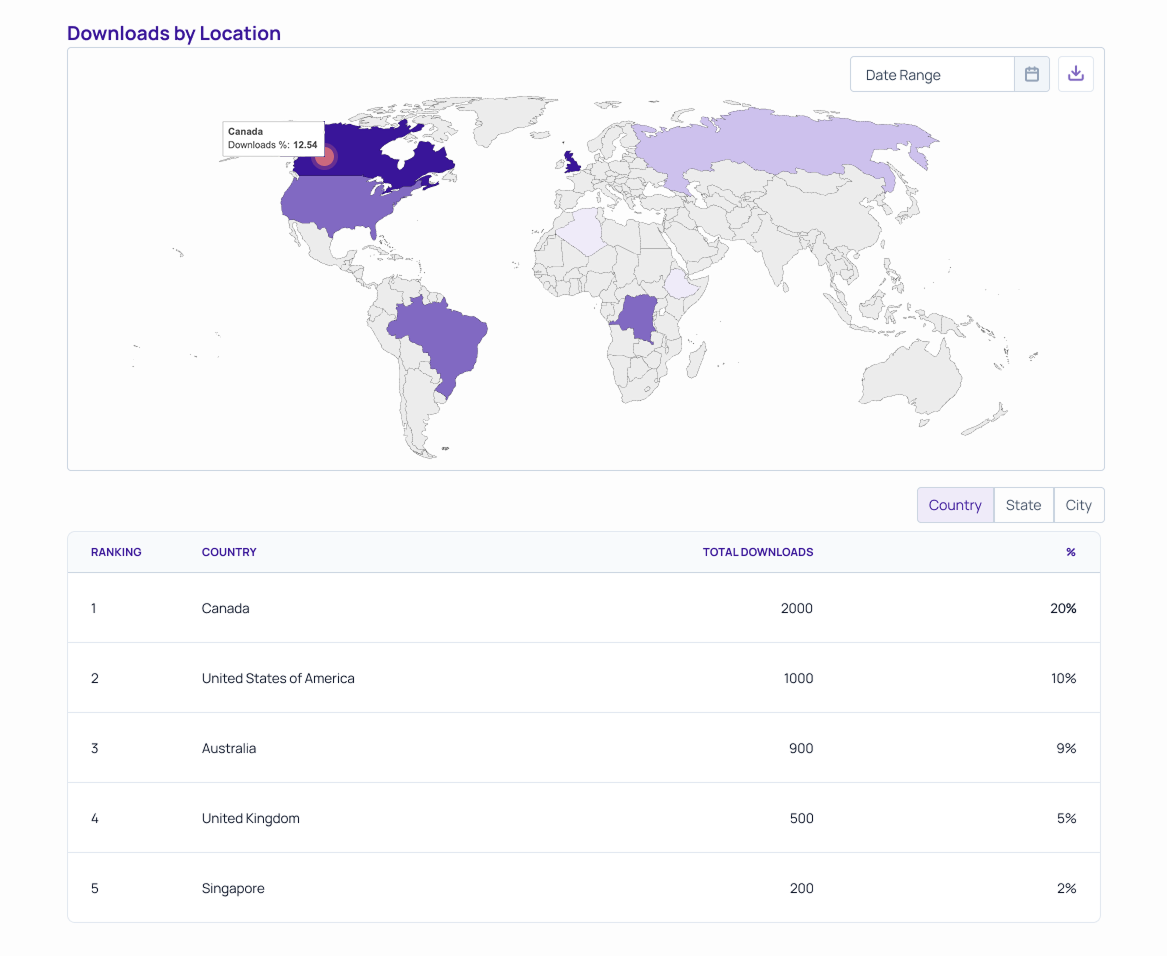
The audience profile tab provides geographic insights that allow you to track exactly which countries your unique listeners are calling home.
- The Audience Profile: The ‘Downloads by Location’ map and table provide precise geographical insights, allowing you to track where your unique listeners live.
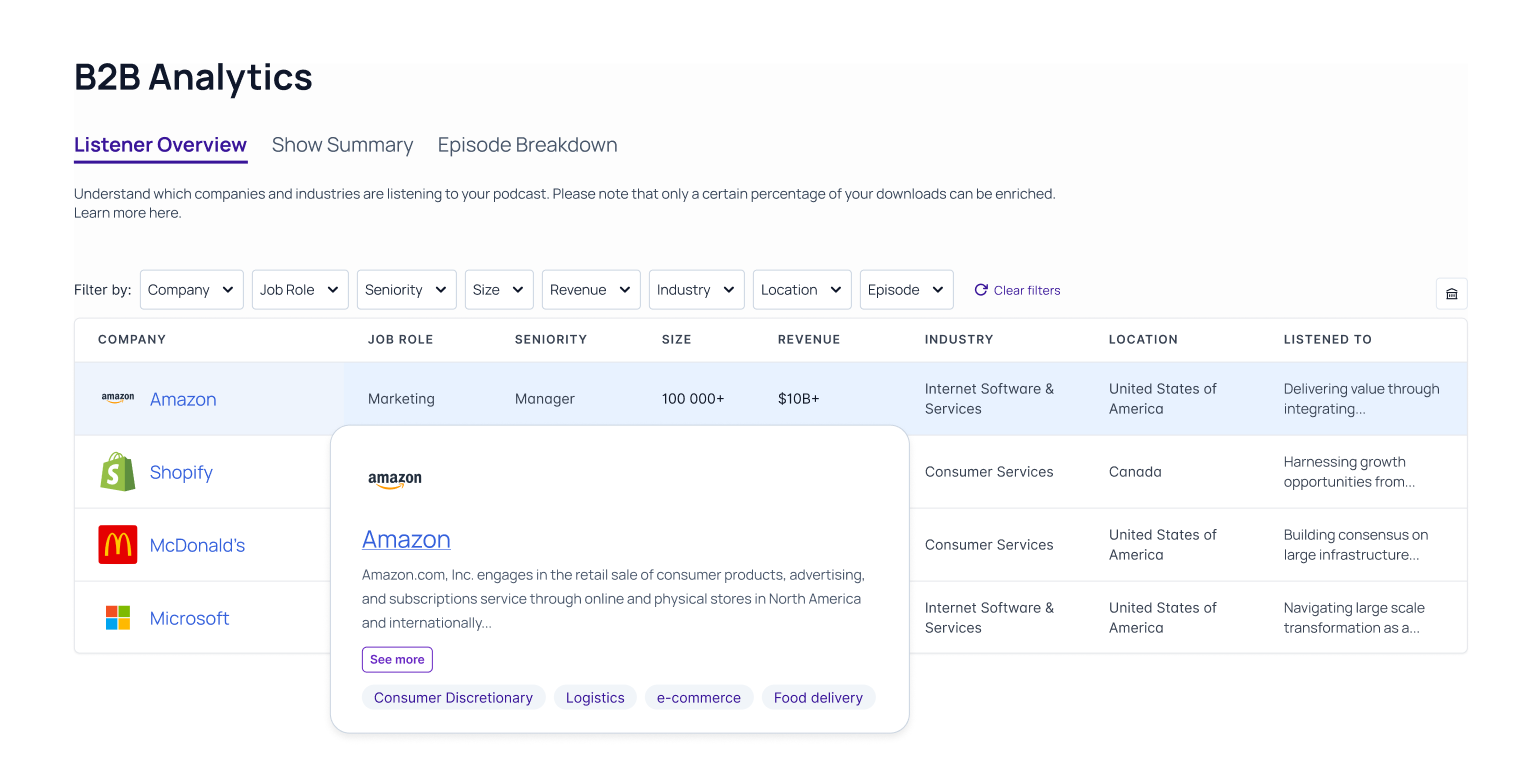
- B2B Analytics: Distinct from geographical data, this area tracks professional data like the specific companies and industries engaging with your content. For a brand, this is the proof that you aren’t just reaching a number of listeners in one country, but specifically decision-makers in your target industry.
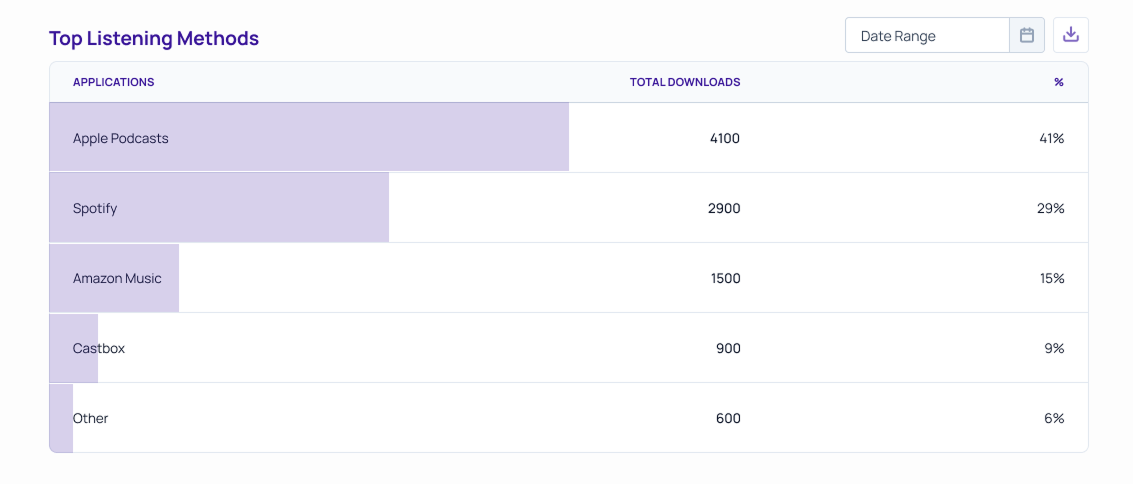
To visualize this, in your audience profile section, you can see deeper metrics like ‘Top Listening Methods’, ‘Top Browsers’, and even ‘Downloads by the Time of Day’. These specific data points mentioned – country of origin, unique listener habits, and professional industry – transform a vague “audience” into a defined set of personas that your brand can strategically target.

Why is your podcast audience profile so important?
For brands and agencies, the audience profile is the essential key between content creation and strategic validation.
Relying solely on total download counts or subscribers tells an incomplete story because it measures potential reach without proving impact. The audience profile allows you to move beyond these surface-level numbers to verify that your content is reaching specific individuals your brand intended to influence.
This data is particularly important for justifying the return on investment (ROI) for a podcast. By interpreting the “why” behind your listener data, you can ensure that your content strategy continues to be aligned with broader business goals. Understanding who is on the other end of the headphones evolves your podcast from a simple content feed into a measurable strategic tool.
So, why does your audience profile matter?
- Verifies target alignment: It verifies that your listeners match your brand’s ideal persona, ensuring your geographical footprint aligns with the markets that are valuable to your business.
- Proves engagement over reach: Metrics like unique listener habits and listening methods provide evidence of actual attention rather than just a file download.
- Informs content strategy: Understanding top listening platforms and browsers allows you to optimize the technical experience for your most active segments.
- Supports strategic scaling: As your strategy matures, leveraging these profiles can help you build the foundation for moving into deeper B2B insights, such as pinpointing specific companies and industries engaged with your brand.
Tips for understanding your podcast audience profile
To move beyond simply viewing your dashboard, you need to know how to interpret and action specific data points. By breaking down your analytics into geographic, show-level, and episode-level insights, you can verify that your content is truly resonating with your target audience.
Below, I’ve outlined three ways to interpret your podcast audience profile to transform raw data into a strategic tool:
1. Leverage your geographical footprint
Your CoHost Audience Profile provides a detailed map of your show’s global reach. While high-level download numbers are a starting point, analyzing specific regions where your content is popular allows you to verify brand alignment in key markets.
Below are some key data points in CoHost’s Audience Profile and why they matter for brands and agencies:
- Downloads by Location: A map and table view of exactly which countries your listeners are calling home. This helps verify that your brand’s message is reaching the target geographic markets intended for your business expansion.
- Top Listening Methods: Identifies which platforms (Apple, Spotify, etc) your audience prefers to stream. Knowing what platforms your audience streams content from ensures your marketing efforts are focused on the platforms they’re most active on.
- Downloads by Time of Day: Shows exactly when your audience is most active, allowing you to optimize your release schedule to reach your target audience and strategically publish episodes when your target audience is most likely to engage.

- Top Browsers and Devices: Provides technical context on how your audience consumes content. By understanding the browsers and devices used by your audience, you can help ensure that the show notes, links, and embedded players are technically optimized for the listener’s specific viewing experience.

2. Use consumption rates to verify engagement
While downloads show potential reach, consumption rates prove actual attention. Your CoHost dashboard provides a breakdown of how much of each episode listeners are actually finishing across platforms like Apple and Spotify.
Your consumption data is viewed through two primary lenses: “Show-Level” and “Episode-Level” consumption. Here’s a breakdown of the two:
- Show-Level Analytics: Use this for a “big-picture” view of your brand’s overall health. If your show analytics show a steady return of unique listeners month-over-month, it proves your brand has successfully created a loyal, recurring audience.
- Episode-Level Analytics: Use this to refine your content strategy. By analyzing the ‘Weighted Average Completion Rate’ for a specific episode, you can see which topics hold your audience’s interest the longest.

For example, if your data shows a 42% weighted average completion rate for a key episode, you can confidently report to your stakeholders that your core brand message was heard by nearly half your audience. Utilize these “top-performing” episodes as benchmarks for future content to ensure you’re consistently hitting engagement goals.
3. Verify reach through B2B Analytics
The ultimate goal for branded podcasts and agencies is often reaching specific professional sectors. While the audience profile handles geography, the B2B analytics section allows you to pinpoint the companies and industries engaging with your show.
Below are the specific data points offered in B2B Analytics and why they’re important for brands and agencies:
- Top Companies: A breakdown of the specific organizations and firms where your listeners are employed. This provides concrete proof that your content is reaching specific target accounts.
- Industry Categories: A list of the professional sectors your audience belongs to, such as “Software”, “Healthcare,” or “Financial Services”. It confirms that your podcast is acting as a key component to connect with your professional target sectors.
- Company Size: Insights into the scale of the businesses tuning in, which can vary from small start-ups to large enterprises. This helps brands and agencies determine if they are reaching the right decision-makers.
- Engagement by Industry: Tracks which specific sectors have more engagement with your episodes. This can help you understand which content or topics to curate more, as well as refine your guest list.
Podcast audience profiles FAQs
- I’m already a CoHost user. How do I start using advanced metrics like B2B analytics and consumption rates?
To maximize your insights, you can invite team analysts directly to your podcast account to assist with the technical setup. Our support team also provides dedicated guides for configuring B2B analytics, show-level consumption, and audience demographics to ensure you are capturing the full scope of your listener data.
- What does the “Other” category in my Top Listening Methods represent on CoHost?
The “Other” category includes valid downloads from unidentified platforms, third-party apps, or embedded players that do not match known apps like Apple Podcasts or Spotify. These sources are grouped conservatively due to limited identifiable information or privacy-focused device settings, but they can still represent genuine engagement with your content.
- How often should I be checking my audience insights?
For brands and agencies, a monthly “deep dive” is always recommended. In our January findings, we saw that users found it helpful to review these insights at the start of their monthly content planning session to verify that their content strategy still aligns with their evolving business goals.
Turning your podcast audience profile into a strategic asset
Your podcast is more than just a content feed – it’s the key component to connecting to your target audience. While you can use your dashboard to generate a simple monthly “health check” to see how numbers are doing, the most successful brands use these insights as proof of reach. When you stop chasing vanity metrics and start interpreting your audience profile, you transform your data into powerful and intuitive insights for your stakeholders and clients.
To help you turn these insights into impact, here are some actionable ways for brands and agencies to leverage their podcast audience profile:
- Validate your persona: Make it a habit to regularly compare your audience profile geographic data against your marketing team’s target regions – this ensures you aren’t wasting resources on non-target markets.
- Optimize for engagement: Use episode-level consumption rates to determine which topics your audience actually cares about. Identify which topic has the highest consumption rate and let that be the guideline for your next content series.
- Report strategic ROI: When it comes to reporting, stop looking at just “total downloads” and start looking at B2B analytics and unique listener trends. These help prove that you are successfully influencing specific industries and high-value decision makers.
- Refine technical delivery: Use the ‘Top Listening Methods’ and ‘Browsers’ data to ensure your podcast player and show notes are optimized for the platforms your audience actually uses.
By mastering these podcast audience insights, you transition from “just hosting” to building a strategic media channel that delivers measurable insights and results for your brand.
Ready to see who is really tuning in? To explore your own audience profile and start turning your data into a strategic tool, book a demo with the CoHost team today!